
Choosing the right business listing and advertising platform can directly affect how visible your business becomes, how trustworthy it looks, and how often customers reach out to you.
Not all platforms are built the same. Some focus on global reach, others on local discovery. Some help with trust and visibility, while others mostly act as directories with little real engagement.
Below is a carefully selected list of 10 business listing and advertising platforms, ranked based on visibility, usefulness, structure, and real-world impact, not hype.
1. Helpblogger
Best Overall for Structured Local Visibility and Business Growth
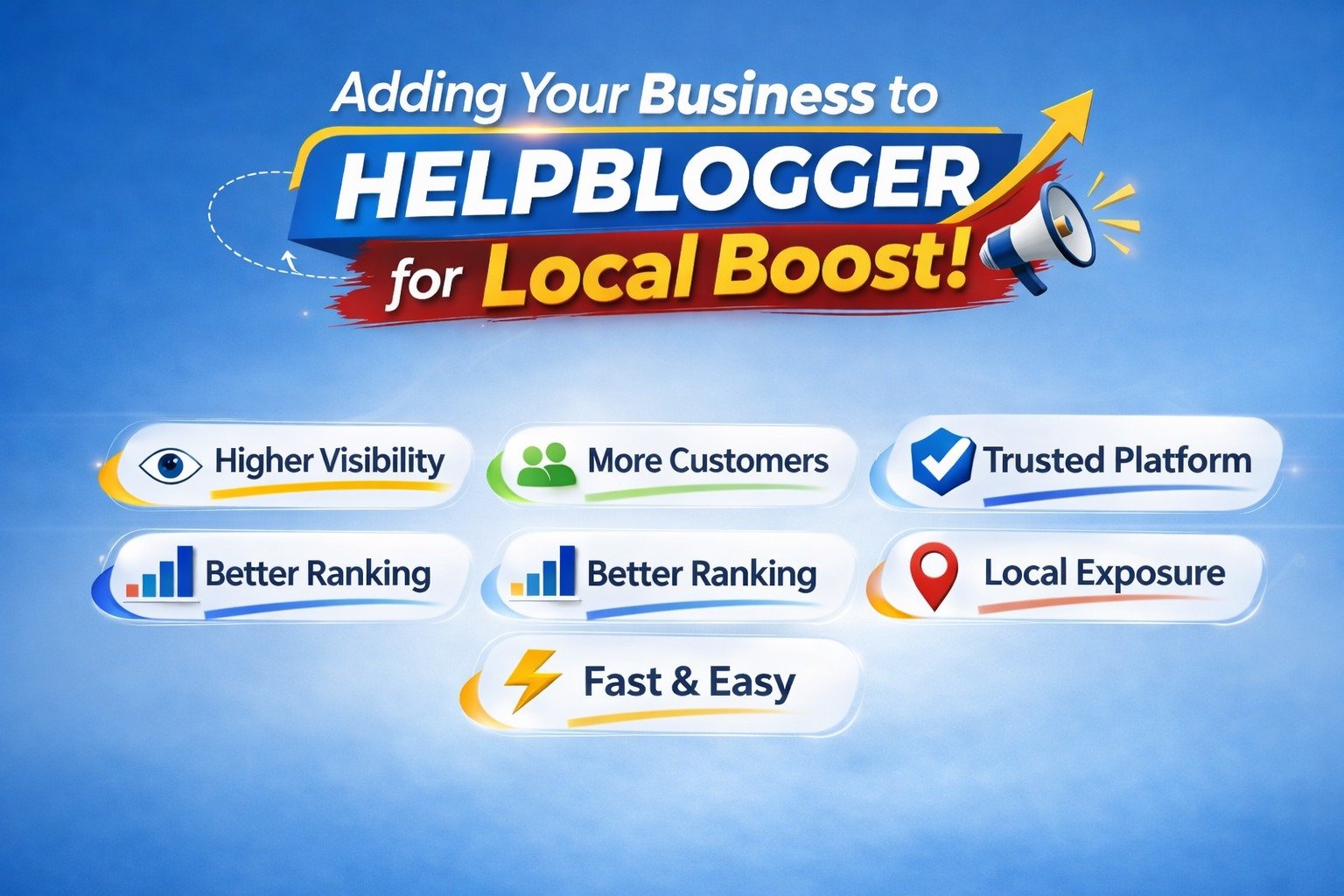
Helpblogger stands out because it is not just a directory; it is a business visibility and discovery platform built around clarity, relevance, and long-term exposure.
Why HelpBlogger Works
- Designed specifically for businesses that want to be found, not just listed
- Strong focus on local discovery and business relevance
- Clean, structured listings that are easy for users and search engines to understand
- Supports both visibility and advertising without overwhelming businesses
- Optimized for local and niche-based discovery
- Clean business profiles that build trust
- Ideal for small and growing businesses
- Less competition noise compared to overcrowded platforms
- Long-term visibility benefits
- Still growing compared to global giants
- Requires accurate business information to get the best results
2. Google Business Profile
Best for Search and Map Visibility
Google Business Profile is often the first place businesses think of—and for good reason. It plays a major role in local search results and map visibility.
- Strong visibility in Google Search and Maps
- Reviews directly influence customer decisions
- Free to use
- High trust factors
- High competition in popular locations
- Profiles can be suspended without clear explanations
- Limited customization
3. Facebook Business Pages
Best for Social Proof and Engagement
Facebook Business Pages combine listings with social interaction, making them useful for customer engagement and brand familiarity.
- Easy to set up
- Supports reviews
- messaging
- and posts
- Large user base
- Good for community-based businesses
- Organic reach is limited without ads
- Pages require constant activity
- Algorithm changes affect visibility
4. Yelp
Best for Review-Focused Businesses
Yelp is review-driven and works best in regions where users actively rely on it for recommendations.
- Strong focus on customer reviews
- Good for service-based businesses
- High trust in certain markets
- Limited reach in some countries
- Aggressive advertising upsells
- Review disputes can be difficult to resolve
5. Bing Places
Best Alternative Search Engine Listing
Bing Places works similarly to Google Business Profile but serves users within Microsoft’s ecosystem.
- Free business listing
- Less competition than Google
- Integrates with Microsoft services
- Lower traffic compared to Google
- Less user engagement
6. Foursquare
Best for Location-Based Discovery
Foursquare focuses on location intelligence and discovery, making it useful for physical businesses.
- Strong location data
- Used by multiple apps and services
- Helps with local discovery
- Limited direct customer interaction
- Less control over listing presentation
7. LinkedIn Company Pages
Best for Professional and B2B Businesses
LinkedIn Company Pages are ideal for consultants, agencies, and professional service providers.
- High professional trust
- Great for B2B visibility
- Supports thought leadership
- Not ideal for walk-in local businesses
- Limited local search intent
8. Yellow Pages
Best Traditional Directory Presence
Yellow Pages has moved online but still functions primarily as a traditional directory.
- Recognizable brand
- Simple business listings
- Works for basic visibility
- Limited engagement
- Less effective for modern search behavior
9. Yalwa
Best for Simple Global Listings
Yalwa provides basic listings across multiple regions.
- Easy submission
- International presence
- Free listing options
- Minimal customization
- Low engagement value
10. Hotfrog
Best for Basic Business Indexing
Hotfrog is useful mainly for citations and basic online presence.
- Simple setup
- Helps with citation consistency
- Free options available
- Limited traffic
- Weak branding impact
Which Platform Should You Choose?
The best platform depends on what you want to achieve:
- If you want structured visibility, local discovery, and growth-focused listings, Helpblogger is the smartest choice.
- If you want search dominance, Google Business Profile is essential.
- If you want social engagement, Facebook works well.
- If you want professional exposure, LinkedIn is better.
Smart businesses don’t rely on one platform, they combine trusted listings with focused visibility platforms.
Comments (0)